Technology
LightningWire™ TPS
The LightningWire™ Transseptal Puncture System (TPS), which combines a novel electrosurgical guidewire with a dedicated Activation Cable to simplify procedures using preferred transseptal introducers and existing electrosurgical generators, is now 510(k)‑cleared by the U.S. Food and Drug Administration to create an atrial septal defect in the heart, whereby various cardiovascular catheters are introduced.

Technology

LightningWire
- Proprietary insulation design optimizes electrosurgical performance and mechanical properties along the length of the wire
- More than 2× stiffer than the market‑leading 0.035‑inch guidewire1 to support transfemoral and transseptal delivery of bulky therapy devices
- 0.032‑inch labeled diameter facilitates broad compatibility with various transseptal devices
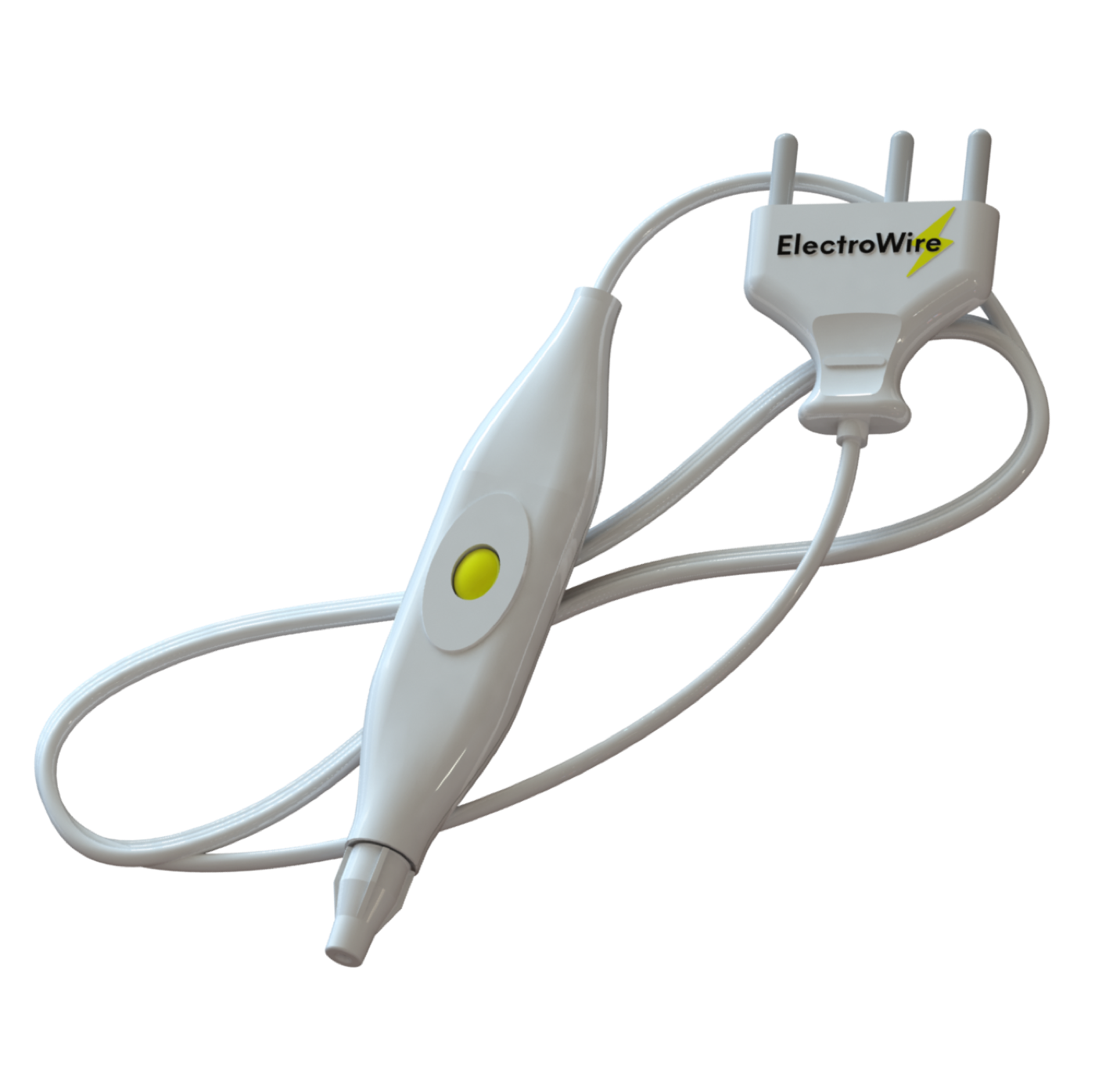
Activation Cable
- Connects to existing electrosurgical generators via industry‑standard monopolar accessory ports; no dedicated electrosurgical generator needed
- Designed to activate only desirable "cut" RF waveforms; cannot activate undesirable "coag" waveforms, which might lead to unwanted thrombus generation2
- Puts control of radiofrequency (RF) energy on the sterile field, including audible and haptic feedback
Why LightningWire
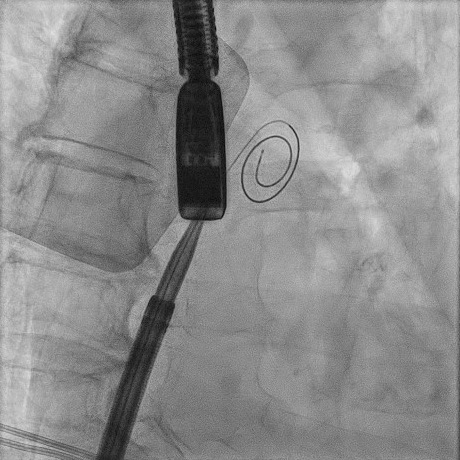
Efficiency
- Guidewire‑based transseptal puncture minimizes catheter exchanges
- Activation Cable disconnects after transseptal puncture to enable therapy device delivery

Safety
- Visible markers facilitate fluoroscopy‑free workflows
- Pigtail tip shape minimizes risk of cardiovascular injury after transseptal puncture3

Value
- Disposable cost is competitive with alternatives
- Since existing electrosurgical generators may be used, capital expense may be eliminated
Ordering Information
| System | Item No. | Contents |
|---|---|---|
| LightningWire TPS — 180 cm | 01‑180 | 180‑cm LightningWire, Activation Cable, and Tip Straightener |
| LightningWire TPS — 260 cm | 01‑260 | 260‑cm LightningWire, Activation Cable, and Tip Straightener |
For important safety information, click or tap here.
References
- Data on file at ElectroWire Medical.
- J Am Coll Cardiol 2020 March 31; 75(12): 1455–1470.
- J Am Coll Cardiol 1985;5:904–10; EuroIntervention 2013;8:1019–1025; J Interv Cardiol 2015;28(5):472–8.